
Episode 30: Of Fire and Ice
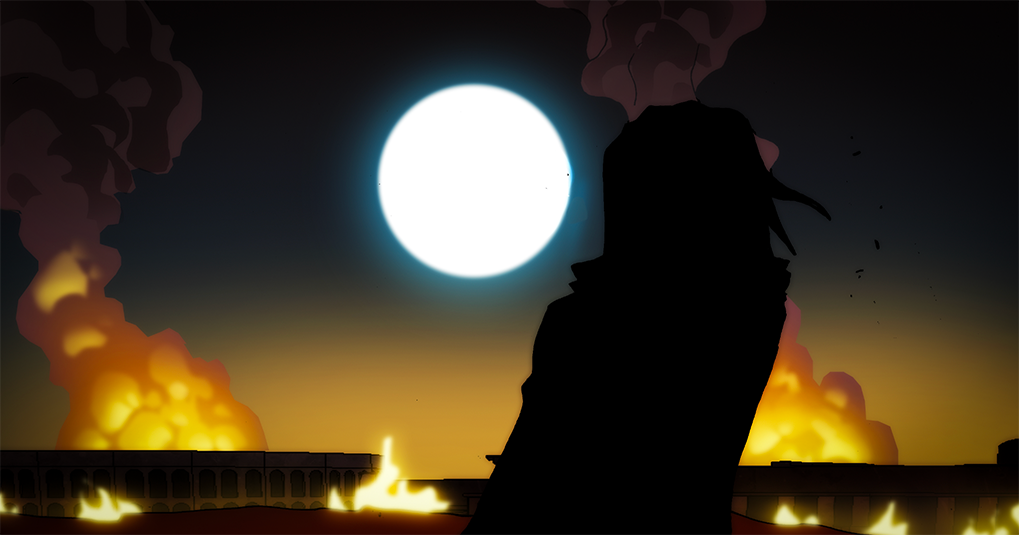
Ezath watches Rome burning - © 2025 Headless Horseman Productions, LLC
Written By Karl White
Under cover of night, Ezath and her Underlings left Rome, it’s fiery glow a wound on the horizon. They set their sights north, chasing rumors of cities richer and safer than what was behind them. But none of it proved true.
After Rome’s fall, the population splintered and began to move. The vampires bounced around with them. Trudging across Europe, Ezath began to realize religion was becoming the great qualifier for status and power. Churches brokered enormous influence, politics in vestments ruled with an iron fist, and a humbled lower class bent under the threat of sin. The rules had changed, temptation itself was now a crime. Ezath was forced to adapt.
Another pressure rose, she was a female, and an unapologetically powerful one at that. But in a world policed by men it would be a problem. Feudal order hardened, titles stacked upon land, and a wealthy, husbandless mistress with servants drew immediate attention that demanded explanations.
Having difficulty avoiding detection in larger cities, she and her Brood became bandits, stealing and feeding along heavily travelled trade routes, instead of in back alleys or private rooms. If she were going to be able to take up for herself again, she'd have to build her wealth. But highway work cut both ways. The risks made them exposed, vulnerable to caravans that expected trouble and came ready for it.
In 819, while terrorizing the Frankish trade routes between Paris and Flanders, Ezath and her Brood came upon a guarded coach axle-deep in mud during a cold rain. It seemed the perfect prize as wagons like these often shuttled coin and finery between rival courts, wealth sent as spectacle. While Ezath attacked the guards, Camilla and Felix were taken by surprise when the carriage door blew open and soldiers spilled out. It was a trap. A monarch’s bait to net highway thieves.
Ezath carved a path and escaped with her life. Camilla and Felix did not. After three centuries of unbroken company, the road took them. Ezath was again, alone.
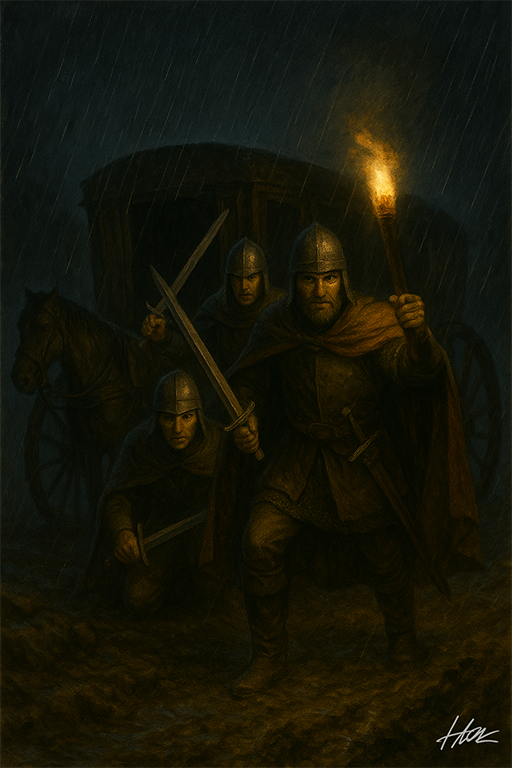
Trap set on a Frankish trade road in 819 - © 2025 Headless Horseman Productions, LLC
At a crossroads and having no desire to be caught in the middle of the growing boundaries of Christianity or under the iron fist of the monarchies, Ezath retreated to the snowy North, slipping into the pagan hush of Norway. In mourning, she’d embrace the long cold winters. And in the endless darkness, she'd feed like a woman scorned. She enjoyed feasting on the Vikings; they were strong, virile, storm-blooded. Hunting them felt like sport, a sharp reversal from her life with the lazy, complacent Greeks and Romans, or the modestly fed Southern Europeans. Her indulgence became training. The North honed her. She’d become a perfect stalker, an exacting tactician, a cold-blooded hunter -- polished.
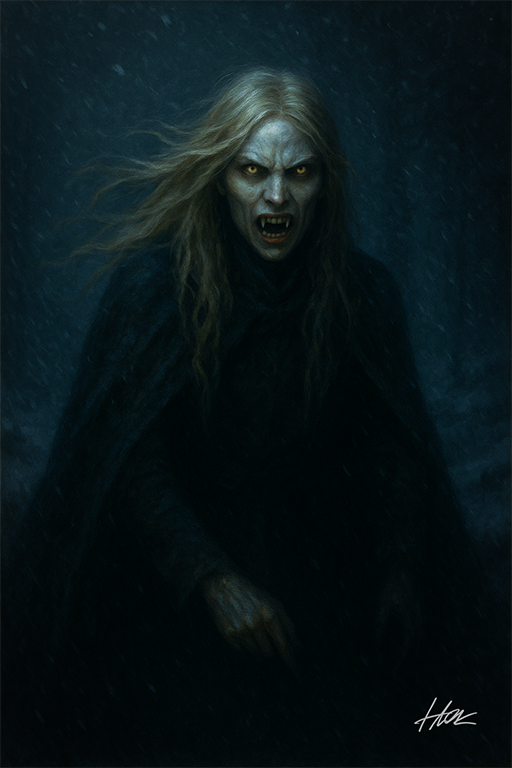
Cold-blooded hunter - © 2025 Headless Horseman Productions, LLC
The winters and the ways of that coast changed her. She stopped trying to understand humans or to build a Brood. Among snow-bright fjords Ezath learned her purpose. She was unique, unmatched, a Vampire who owed this world nothing. Civilization or whatever part of it she wanted, was hers to take. Humans were necessary, but only as food. Wealth and station meant little without the power to remain free.
Unfortunately her solitude would come to a sudden and violent end. In 1099, while in Sweden, near Kalmar, she was exposed. Christianity had seeped into villages, scrubbing out old rites. To the Norse, she had once been a predator rooted in nature. But with the new religion, the sky split into good and evil. Ezath was marked as a stealer of life, thirsting after Christian blood.
Villagers tore through the town searching for her lair. As night fell torches flared. Swords waited for the demon they named the Draugr, the walking dead of their stories.
Ezath was spotted lurking in the shadows and an angry mob gave chase. By her own hands, she slaughtered hundreds of fierce Viking warriors, in a stand that would later be immortalized in the poem “Battle with the Draugr”.
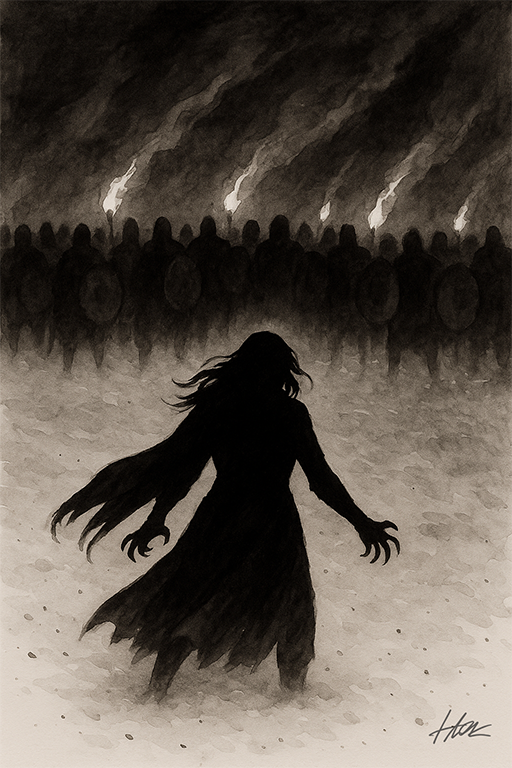
Unnamed Artists Depiction of “Battle with the Draugr”, circa 1827 - © 2025 Headless Horseman Productions, LLC
The tale traveled fire-to-fire, circulating into the Middle Ages, and the figure at its center cemented as evil-incarnate, furthering Ezath’s legend.
But as time passed, things again changed. In the early 12th Century, the world was radically morphing. In Europe, the Renaissance was beginning, led by an intellectual revitalization of self-awareness among the common man. Humans were advancing rapidly, becoming a collection of intelligent creatures who could recognize a killer was in their midst.
For Ezath, the era of creeping in shadows was over. Her skills were honed to a razor, her mind no longer snagged on the small confusions of perpetual youth. It was time to change the hunt. She would graduate from a simple predator to a cerebral assassin.
She knew nearly everything of human habit and characteristics, and the time had come for her to rejoin society, instead of skirting it. But the knowledge and fear of Vampires meant her approach had to evolve.
She would wear a life, masquerade as a human, and find a way to build her status high enough to become untouchable...all while controlling her wanton desire for blood until the time was right.
An interesting aside, in the growth of the Vampire myth, was an obscure poem that surfaced during the Fourth Crusade in Constantinople. The text, written in Latin and known simply as Suus Fābula, which translates to “Her Story”. It spoke in the voice of a woman who claimed to be the first Vampire, spelled in an early rustic hand (V-A-M-P-Y-R). But the narrative would serve as an interesting blueprint of what would become the most enduring symbol of supernatural terror.
FEMALE VOICE: “Neither demon nor ghost, a creature of another kind, a Vampry, the first. Keep to the shadows, on the hunt for thy prey. A smile, a gesture to inherit trust of thee and death. Strength and cunning thou seek out blood. We began as three, Ezath, Urab and Rah; Journey from the south to part ways. Under the name Elisávet, First unto Greece and then Rome. I witnessed Alaric and his men sack the city, Delivered him the fat and bloated aristocracy. And delighted in the sight of their slaughter.
Travelled north to the land of the heathen Norse. The blood spilled among the people suited thee. Havth brought horror and fear. Exposed thee to superstition as weapons were raised. Fled once more underneath cover of night, I shalt continue on till peril behind. Hide in the morn through valley deep and dark. Thou wilst see thee again underneath the guise of nobility. With thine anger and revenge and death to follow.”
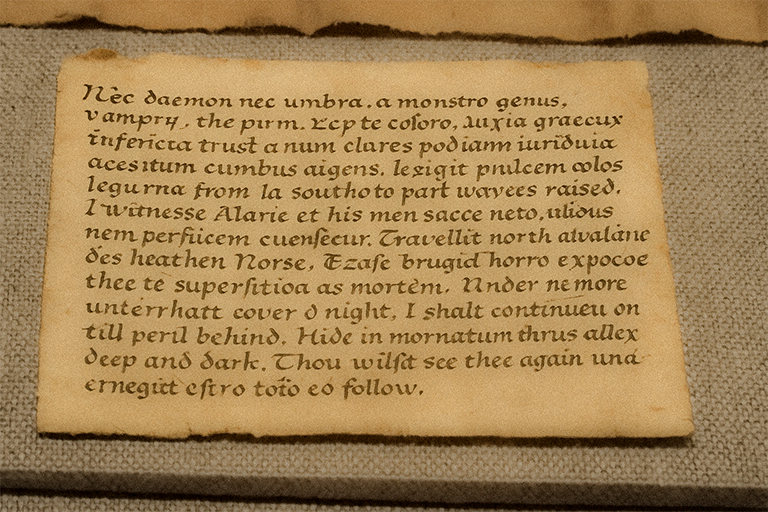
The original copy of Suus Fābula on display at The Hellenic Museum in Thessaloniki, Greece - © 2025 Headless Horseman Productions, LLC
An eerily accurate depiction of Ezath’s life of independence. The text was translated and incorporated in several other works including the famous French book Histoires des Morts, remaining relevant proof of the existence of Vampires through the Middle Ages. But as the early modern era gave way to Renaissance philosophy and the Age of Enlightenment, the meaning behind the verse became regarded more as a fable.
What was most striking about the character’s portrayal was the authenticity of the information -- like the name Urab, the hidden root of Anu’s full name, Anurab. A detail known only to the original three travelers. Neither of them would have created such a writing. Yet the writer knew more of Ezath’s life than any Underling ever did. A mystery for sure, as it seemed someone was out there, watching her through the ages.
TO BE CONTINUED…