
Episode 47: Feral
Written By Karl White
In the Hive, tensions simmered like a sealed cauldron ready to burst. Time had blurred into something shapeless. A fevered stretch of darkness with no escape, no hint of the outside world, packed tight beneath the earth. Hunger warped the Brood into something feral.
The last of the human prisoners had been drained long ago, leaving them to bleed rats, and, when desperation sharpened, they’d turn on one another. Whispers curdled into snarls. Alliances snapped like dry twigs. The massive bunker’s every corridor carried the faint hiss of distrust. In that suffocating black, even undying creatures began to feel the slow, gnawing madness of confinement, hoping for freedom or death.
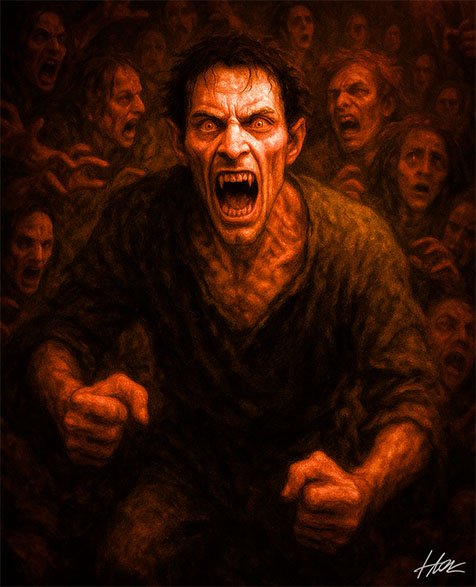
Vampires trapped in the Hive - © 2025 Headless Horseman Productions, LLC
During the Revolutionary War, in the spring of 1781, British forces took Charleston and marched inland. Troops sacked towns, torched houses, and plundered anything of value. As a regimen came upon the eerily abandoned Monfret Plantation, they advanced on the massive house with greedy curiosity. Inside, soldiers quickly uncovered a concealed passageway leading to the Hive.
Far underground, and finding the heavy, locked entrance, the Red Coats salivated at what sort of treasure could be locked behind.
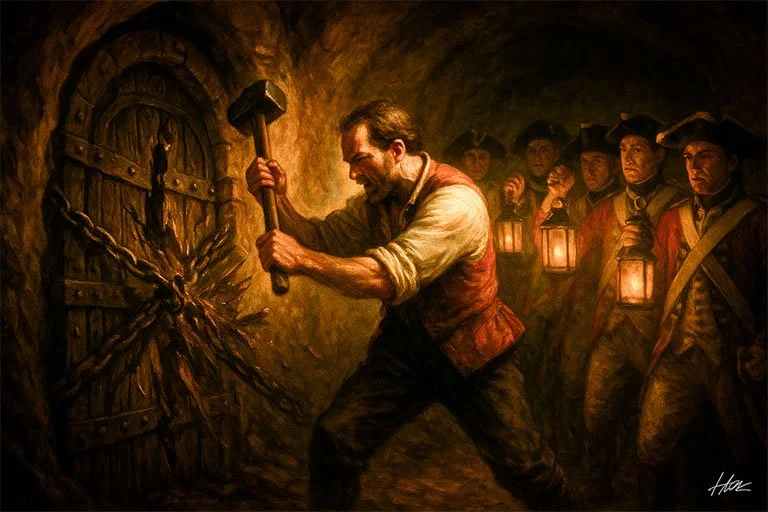
Redcoats about to break through - © 2025 Headless Horseman Productions, LLC
For days a contingent of Redcoats worked to force their way into the iron barrier...but when the door finally gave way, the soldiers stepped into a churning nightmare -- finding themselves in a starving nest of warring bloodsuckers.
Droves of vampires poured from the breach in a frenzy. They’d flee the plantation, swarming the war-ravaged countryside. By the time the dust settled, nearly ninety percent of Victor’s Brood was gone, scattered, feral, starving, looking for anything warm-blooded to make a meal of. Only the most loyal would return to the Hive, hoping their devotion might buy them favor when Victor returned.
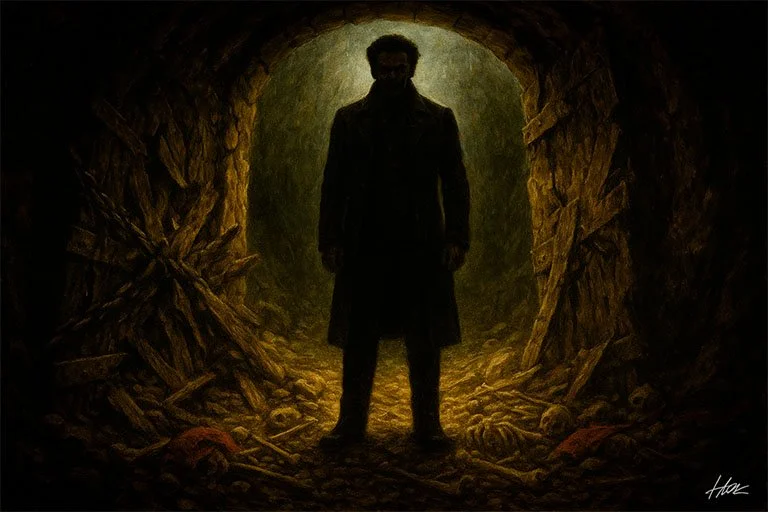
Victor returns to ruin - © 2025 Headless Horseman Productions, LLC
In 1784, reconstruction from the war was well underway, and Victor, rich, rested, and self-satisfied, returned from exile in Great Britain. Underground, he descended into the Hive expecting cheers of his return. Instead, he found ruin.
UNDERLING: Father, the rest escaped. We tried to hold them back, but they were too many.
VICTOR: You were right to stay, and obey me. For that you will be rewarded.
UNDERLING: And the others, those who cursed your name and left?
VICTOR: They will feel my wrath.
Victor possessed wealth and status, but power, absolute power over his Brood, was his true obsession. To him, the escape was betrayal of the highest order. He vowed to hunt the deserters across the continent, to kill them without mercy.
But the truth behind his fury was fear. Victor feared the discovery of those that escaped. He treaded a strange line, passing himself off as a human, using his status to hold above others. His influence in civilized society depended on secrecy. Discovery of him being a vampire would be devastating.
And a loose, ravenous pack of rogue vampires could expose him, ruin everything he had built, or worse, draw the attention of Rah’s older, bitter remnants seeking revenge. He had to get ahead of the problem.
So Victor, along with his most trusted enforcers, hunted down the traitorous vampires. Slaying them without question or trial. But Victor’s expansive search uncovered a horrifying discovery –- the vampire population had exploded. His escaped Brood had began making others, lots of them. Violent, volatile Minions with no discipline, no understanding of the old rules, feeding without restraint, scrambling for shelter like animals driven mad.
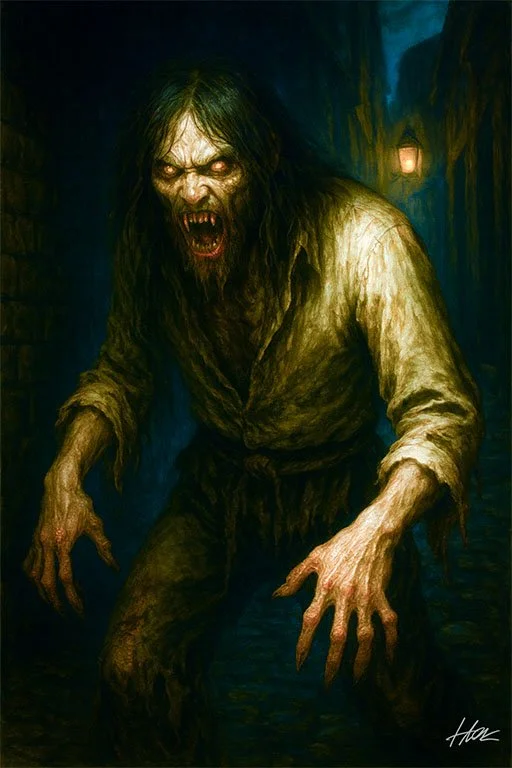
Feral vampires stalk the Colonies - © 2025 Headless Horseman Productions, LLC
The outbreak wasn’t just localized to South Carolina. Reports trickled in from Georgia...Virginia...even as far north as Delaware. Victor and the others followed a blood-soaked trail, in a desperate attempt to erase the problem he had created.
After the War, the South had an all out vampire problem. Like cockroaches, multiplying, and scurrying about in the darkness. The only difference was, these vermin could rip your throat out and drain your blood.
While Victor hunted escaped Brood-members, Charleston simmered with terror. Savage vampires, Minions of Minions, stormed the low country, feeding whenever opportunity struck.
In the daylight, bodies, dozens of bodies were being discovered daily. Drained of blood, left in pieces. Residents were too educated to believe it was wild animals or some strange pestilence at work. There were rumblings of “things” stalking the shadows. Whispers in closer circles of vampires. And when night fell, armed mobs lit torches and marched with muskets, determined to stop the plague of bloodsuckers themselves. They caught some. Hung others. Burned even more.
But the creatures of the night, although volatile and untamed, were savvy enough to adjust their hunt. Turning their focus toward a population with no ability to organize, no political power, and no right to have weapons -- They began to go after slaves.
The conditions in which most enslaved lived made them especially vulnerable to vampire attacks. Poorly armed, often ignored or disbelieved by their overseers, they faced the threat alone. Coming from West African and Caribbean cultures where the supernatural was accepted, many slaves recognized the danger immediately. But warnings to their masters were dismissed, so they dealt with the problem quietly, within their own circles.
Because vampire attacks in white society subsided, the public believed the crisis was resolved. It was not. Among the enslaved, the danger only worsened, night after night.
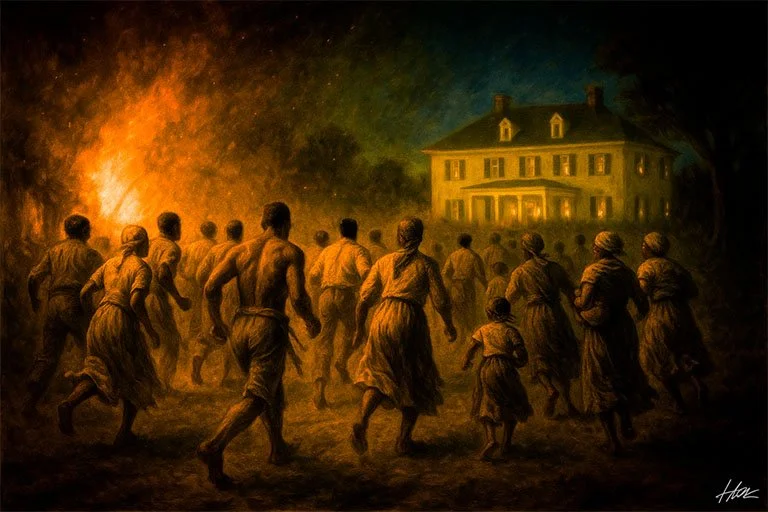
Trouble at the Ashley Plantation, 1791 - © 2025 Headless Horseman Productions, LLC
In 1791, those troubles spilled out into the open again. On the Ashley Plantation, slaves sought help from their master, Jackson Bouche, after a vampire had been terrorizing them for weeks. With their pleas ignored, they rebelled, storming the main house, seeking refuge from the creature after it had lit their shanties ablaze in an attempt to smoke them out.
Bouche escaped the siege, riding into town where he quickly rallied a mob. When they returned, the plantation was engulfed in flames and the slaves were standing over the corpse of a dead vampire...a white landowner by the name of Hammond, who had gone missing weeks before. Rather than recognize the truth, Bouche and the others accused the slaves of killing Hammond to steal his money and attempt to flee north. Those present were executed, hung without mercy...and the incident was buried in history as a “thwarted slave uprising”.
But from that horrific tragedy, something else was born that night. A quiet, smoldering movement. One that would grow across generations, uniting human communities against a threat they barely understood, yet sensed in their bones. A movement that, in time, would turn the tide against the monsters in the dark.
TO BE CONTINUED…