
Episode 61: Sheep’s Clothing
Written By Karl White
He called himself king, but the earth never answered. A Child of Nature without an element to claim. He wore titles like feathers with no bird to give them meaning. The rivers knowing not his name. The stones unable to remember his footsteps. Beneath the open sky he stood alone, rich only in the sound of his own voice, owning nothing that would endure.
After his defeat at El Tajín, Cuetlachtli did not retreat into reflection or restraint. The bitter lessons didn’t humble his recklessness or turn him into a more calculated warrior. If anything, he doubled-down wanting another empire, sharpening the delusion that rule was his destiny.
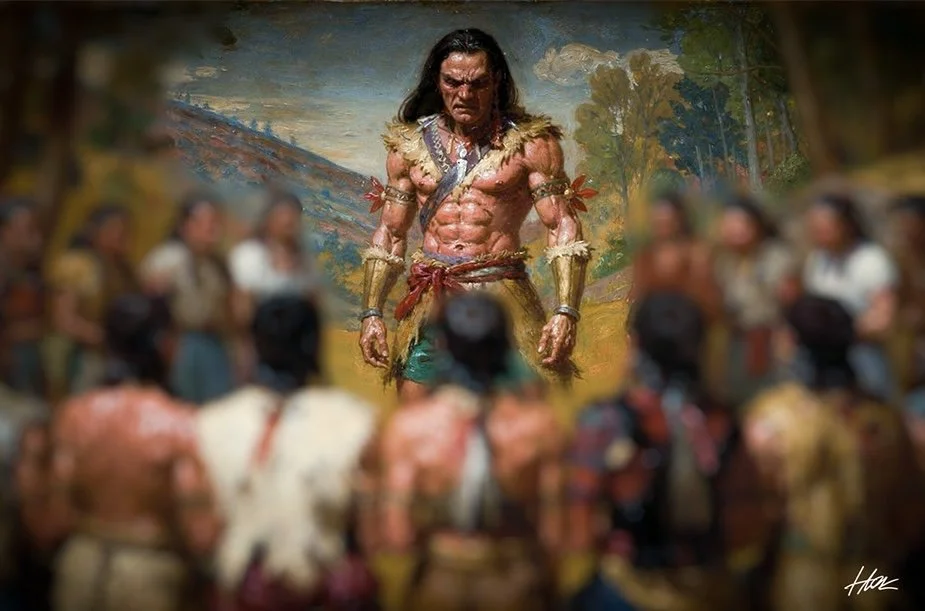
Cuetlachtli gains followers - © 2026 Headless Horseman Productions, LLC
There were no such things as “Kings” in American Indigenous culture, yet that’s what he referred to himself as, after his time with the Aztecs. And he’d satisfy his need for subjects by avoiding already established tribes and settlements, instead converting the wandering and the weak into his werewolf faithful. Promising them a shining kingdom that would be looked upon by all others in awe. Within decades, Cuetlachtli commanded a growing legion of shapeshifting followers he called the Wonvertu, translated to Wolf Spirits.
Under his leadership, the Wonvertu moved slowly and deliberately, preying upon lesser tribes. Some were absorbed, others erased. The pack remained nomadic, careful not to draw the attention that had doomed him before. Cuetlachtli never spoke of El Tajín. He never acknowledged defeat.
But the wandering life wore thin. Permanent settlements were spreading across the Southwest, offering the tribe quick meals and resources. But enhanced fortifications were becoming a deterrent. The Wonvertu were growing restless. They wanted the holy domain Cuetlachtli had promised, a place where they could feed, endure, feel safe.
The problem was simple, but insurmountable. None of the Wonvertu were builders. No artisans. No farmers. No planners. If Cuetlachtli and his pack wanted a kingdom, they would have to take one already made.
In 1134, the king and his legion spotted a collection of fortified cliff dwellings -- the Anasazi settlement in Mesa Verde, located in what is now southern Colorado. For days the Wonvertu watched the dwellings at a distance, surveying the area immediately surrounding the compound, deciding to make it their new home. As night fell, Cuetlachtli approached with a small delegation, calling for a meeting with the leader of the Anasazi, while the rest of his pack lay hidden in wait.
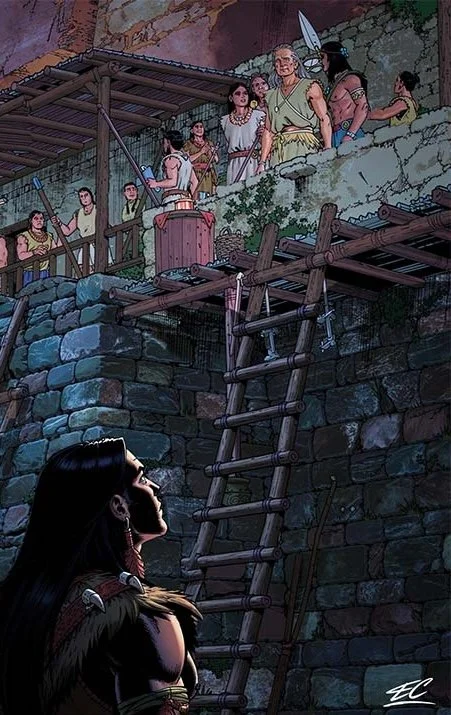
Approaching the Anasazi - © 2026 Headless Horseman Productions, LLC
CUETLACHTLI: We’ve roamed far, in search of food and shelter, if you can spare. We are but a meager band of travelers and come in peace.
The offer was refused. The trap, obvious and poorly veiled, collapsed under scrutiny.
CUETLACHTLI: Have it your way. Prepare yourselves, for beasts you cannot defeat.
Cuetlachtli and his followers shifted and surged forward -- Attempting to seize the city by violent force. But the Anasazi held the advantage of height and stone. Ladders were pulled away. Arrows and spears rained down. The open ground became a killing field. Several Wonvertu fell before the rest fled into the dark. Another failed crown lay broken at the feet of the self-proclaimed “King of the Wolves”.
Self-awareness, humility, or modesty were nowhere in Cuetlachtli’s wheelhouse. No empathetic or mindful trait existed within him. The argument could even have been made, especially early on, that he was as much a tragic figure as he was a villain...but his refusal to change hardened tragedy into tyranny.
Facing yet another obstacle of his own doing, ran counter with his selfish goals. And though he’d never outwardly admit it, Cuetlachtli felt lost inside. His hunger for worship outpaced his capacity to lead. The world was shifting around him, growing more complex, more resistant. And still, he believed himself the Light of the World...and why should light have to adapt to shadow? Stranger still, Cuetlachtli never manifested an elemental power. Nor did any of the Wonvertu. A glaring irregularity in the curse.
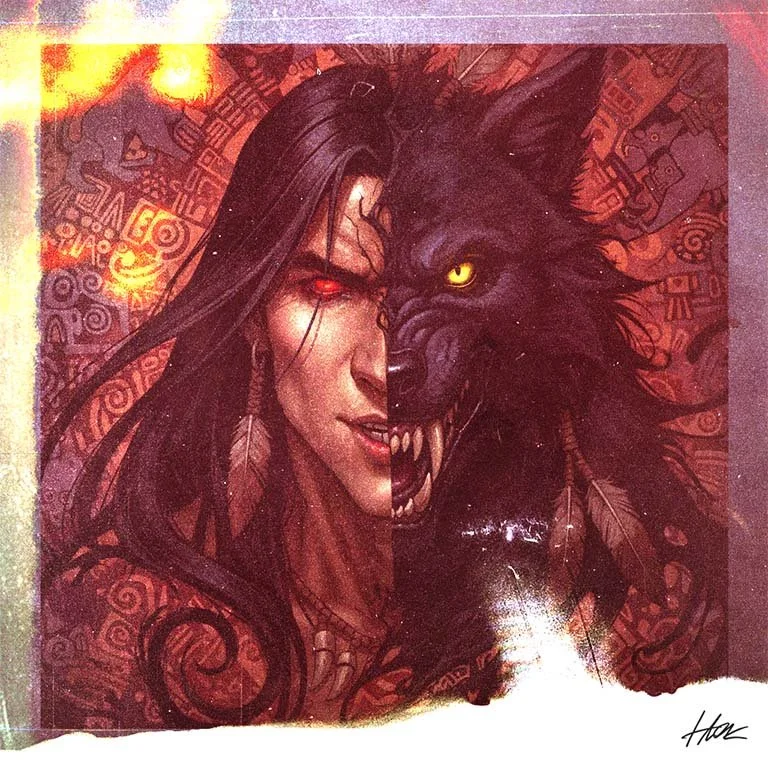
Egotistical to the core - © 2026 Headless Horseman Productions, LLC
By the late-15th century, Cuetlachtli’s own push for expansion ended with idle waiting. He and the Wonvertu went into hiding in the Rocky Mountains. It was there, they’d carve out a hidden stronghold along a narrow mountain pass. What began as a crude refuge slowly evolved into a clever façade for their beastly activities.
They nested in caves veined with gold, long before the world’s hunger for the metal reached its peak. Cuetlachtli and his Wonvertu would sit and wait for prey to cross their path. A spider’s web, just anticipating for a fly to land. Animal, man, it mattered not to them. With their hunger first and foremost, food was food.
Prehistoric mountain trails carved by early people were still frequented. Following the path of least resistance over the massive range would be used and reused by anything with legs heading east or west. As time passed trade routes and expansion led to a larger influx of travelers coming through the Rocky Mountains. Cuetlachtli and his offspring leaned into the guise. Appearing friendly, even luring in capable passers-by to help construct what would appear as a safe outpost by day, only to hold a hungry pack of werewolves by night.
As natives, trappers, traders, missionaries, and other travelers would reach the pass, weary and worn, ailing from the altitude and cold, they’d encounter what seemed like a heavenly oasis of respite. Met by a harmless tribe, welcoming them.
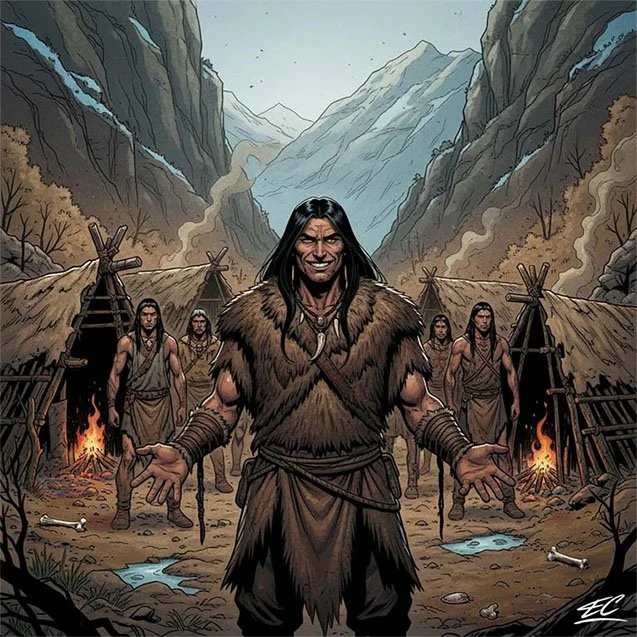
Outpost in the mountain pass - © 2026 Headless Horseman Productions, LLC
MISSIONARY #1: Oh praise, be. Gustav, look there. Shelter. After all these miles...
MISSIONARY #2: A mercy we did not earn. The passes nearly broke the horses, and us with them.
CUETLACHTLI: Welcome friends, you’re safe here. Rest your horses and your weary bones.
Behind the veil of false smiles and warm fires, hid malicious intentions. Wolves in sheep’s clothing that would rear their vicious fangs under the light of the moon.
MISSIONARY #1: Gustav, wake up. Do you hear that?
MISSIONARY #2: Hear what? The wind?
MISSIONARY #1: There are creatures outside, circling.
The deception worked to perfection for centuries...but word of the trap would slowly trickle out as populations centers on either side of the mountain blazed new trails through the landscape and carried stories of humans who became wolves, high in the pikes above.
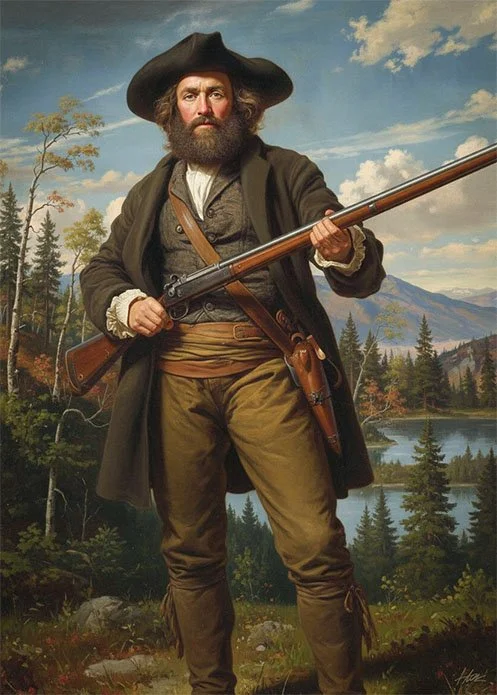
Pierre Marat, painted two months before his death in 1765 - © 2026 Headless Horseman Productions, LLC
But Cuetlachtli and his followers had the advantage, as the pass protected them on either side, and to some, the story was just that, a story. That would change in 1765, as an expedition led by French fur trader and explorer Pierre Marat met their end when they encountered Cuetlachtli and his pack. Believing they were a small peaceful Navajo tribe, they let their guard down long enough for the wolves to strike.
But one of Marat’s men escaped, carrying the name Cuetlachtli with him. Solidifying the old stories as more than just campfire lore. And what would be required to rid the world of real beasts, was a show of force.
TO BE CONTINUED…